


| The cafe racer comes under a name of splendor classic. Its the same engine of normal splendor of 99cc | |||||||||||||||||||||||||||||||||||||||||||||||||||||||||||||||||||||||||||||||||||||||||||||||
| The engine could be atleast of a 150cc for such a classic cafe racer | |||||||||||||||||||||||||||||||||||||||||||||||||||||||||||||||||||||||||||||||||||||||||||||||
| |||||||||||||||||||||||||||||||||||||||||||||||||||||||||||||||||||||||||||||||||||||||||||||||
Showing posts with label Bikes. Show all posts
Showing posts with label Bikes. Show all posts
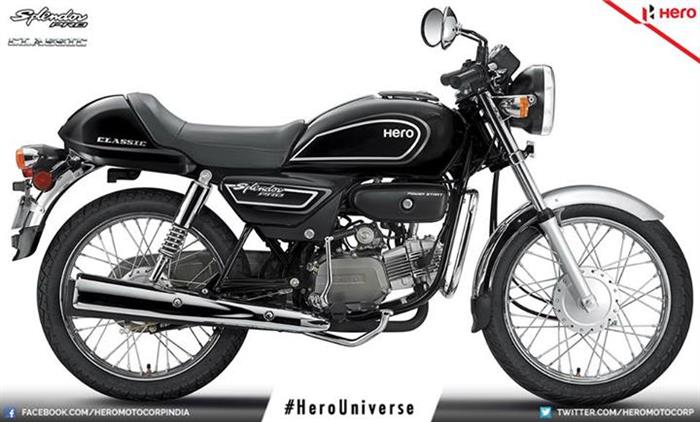
Hero MotoCorp seems to have finally woken up to the call of several performance bike lovers of our country and have decided to come up with new models/proper model revamps instead of introducing yet another colour scheme for his existing product. Here is a list of upcoming Hero models that could very well change everyone’s perception about bikes from world’s largest selling motorcycle maker. Here is a list of upcoming Hero bikes in India 2014-2015-
Hero HX250R

- Expected launch date- October 2014
- Expected price- INR 1.6 lakhs
- Engine- 250cc
- Power- 31 PS
The HX250R is easily among the most awaited bikes of recent times and the next big thing from Hero will be out on Indian roads in the festive season this year. HX250R is powered by a 250 cc engine churning out a power of 31PS. Expected to be priced at approximately Rs. 1.6 lakhs, the upcoming bike is expected to become a hot favorite in its segment. As always, Hero is likely to offer best-in-industry after sales experience and quality parts.
Hero RNT Diesel Hybrid Scooter

- Expected launch date- End 2015
- Expected price- INR 1 lakh
- Engine- 150 cc
- Power- 13.5 Bhp and a torque of 35 Nm
While diesel engine have always been associated with cars and locomotives, here’s a bike that will be propelled by the stickier fuel. The new Hero RNT Diesel Hybrid Scooter is expected to hit production towards the end of 2015. This bike comes with a 150 cc engine that has a power output of 13.5 Bhp and a peak torque of 35 Nm. Expected to be priced at INR 1 lakhs, Hero RNT Diesel Hybrid Scooter will be a blend of unique concept and rugged looks.
Hero Dash Scooter

- Expected launch date- April 2014
- Expected price- INR 55,000
- Engine- 111 cc
- Power- 8.5PS and a peak torque of 9.4 Nm
The Hero Dash is Hero’s latest venture in the automatic scooter market. The Dash is powered by 111cc engine that produces a power of 8.5PS and a peak torque of 9.4Nm. The Dash is a feature rich scooter that focuses more on the daily needs of the user than outright style. Expected to be launched in April 2014, this scooter is could be launched at an attractive price of INR 55,000.
Hero Leap Hybrid Scooter

- Expected launch date- --NA–
- Expected price- INR 90,000-1,00,000
- Engine- 124 cc
- Power- 10.7 Bhp and 60Nm
Another interesting upcoming product from Hero is the new Leap Hybrid Scooter. The Hero Leap is the country’s first hybrid scooter and boasts of a 124 cc engine that would spurt out a power of 10.7 Bhp along with a torque of 60Nm. Hero will launch its first hybrid scooter that will run on both petrol and electric power sometime next year. It is speculated that new member of the Hero family will be priced somewhere around INR 90,000-1,00,000. This will be a great opportunity for Hero to show its prowess in electric-powertrain department.
Hero Xtreme Sports

- Expected launch date- October 2014
- Expected price-INR 75,000
- Engine- 149.2 cc
- Power- 15.2 Bhp and 12.80Nm of Torque
The Hero Xtreme, which comes with a 149.2 cc engine and plays an important role in the bike maker’s portfolio, has been given a proper facelift and will be launched around festive season this year. The Hero Xtreme Sports enjoys a peak power of 15.2 Bhp and a torque of 12.80 Nm. Expected to be priced at INR 75,000, this bike will bring along some much needed freshness to the CBZ brand.
Two bits of news surrounding ATVs are likely to get enthusiasts excited. One, is that the RTO is considering allowing ATVs to be legally registered and ridden on roads, instead of only off-road. And the second bit is that the price of ATVs is likely to come down as the government is also allowing ATVs to be manufactured locally.
Polaris is likely to be the first ATV manufacturer to get its products on to the road. According to a company source, Polaris has sent its Sportsman 500 ATV to the ARAI for homologation – a process every vehicle that can legally be registered in India needs to go through, to gauge its road-worthiness for Indian conditions. Once this process is complete, you could walk into a Polaris showroom and buy the Sportsman 500 and ride it home. Right now, these ATVs cannot be registered and are not allowed on public roads.
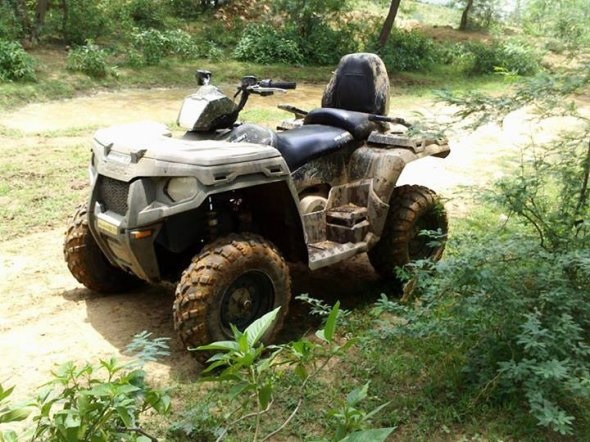
The government is coming up with a new category in the vehicle registration rules – allowing these vehicles to be registered as ATVs, and which can be privately owned. This is unlike the rules that have been drafted for quadricycles, where such four-wheeled modes of transport can only be registered for commercial use and have to comply with a set of norms. ATVs such as the Sportsman 500 are like four-wheeled motorcycles in a sense, and would require the rider to wear protective gear such as helmets (wherever the helmet rule is in force in India).
As of now it’s only one ATV that has been sent for homologation, but expect Polaris to soon follow it up with more ATVs from its range, which could see vast uses in rough terrain such as desert, snow and rocky regions, while also finding use in farms and beaches for short distance recreational transport.
In a related report appearing in the Economic Times, which ties in with this bit of news CarToq got, the government has apparently approved a proposal outlining the safety and emissions norms for ATVs to be made in India. Honda is another ATV manufacturer that sells its ATVs globally and is considering making them in India. Another company that imports ATVs and sells them in India, competing with Polaris is Nebula, whose ATVs are priced from below Rs. 1 lakh up to Rs. 23 lakh. Polaris ATVs currently are priced between Rs. 2.5 lakh to Rs. 21 lakh.
Watch this space for more!
KTM Sportmotorcycle AG is a world renowned Austrian company that manufactures mopeds, motorcycles and bicycles. It was founded as a metal workshop in 1934 by famous engineer Hans Trunkenpolz and was named Kraftfahrzeuge Trunkenpolz Mattighofen. It started repairing motorcycles by 1937 and began producing motorcycles in 1954. It is largely famous for its off-road motorcycles but it also has begun producing street motorcycles in the recent years. It has its current headquarters in Mattighofen, Austria. KTM began a joint venture with Indian two-wheeler manufacturing company Bajaj Auto in November 2007 according to which they will collectively produce motorcycles for India as well as some other Southeast Asian countries. Bajaj Auto holds a decisive 47% stake in KTM by March 2012. They launched Duke 200 in January 2012 and Duke 390 in June 2013 in India.
Recently, KTM showcased three fabulous Supersport bikes, RC 390, RC 200 and RC 125 at 71st EICMA motorcycle show in Milan, Italy on November 6, 2013. These bikes are based on their naked Duke model counterparts with some slight differences. The frame is visually similar but is slightly changed and is a powder-coated Tubular space frame made from steel tubes. Also, the other features that have seen changes are top speed, an increased steering head angle which leads to shorter trail and wheelbase and increased ground clearance which further leads to even sharper steering, new and aggressive riding position, new rear sub-frame, new headlights and fuel tank and a slightly increased weight. All three bikes will be manufactured at Chakan, near Pune in a plant of Bajaj Auto and will be sold in India and exported to the other markets as well. Although, it is speculated that RC 125 will be only exported and not be sold in India. These are expected to be launched by April 2014. 2014 KTM RC 200 is a full faired bike which clearly follows KTM's Ready to Race philosophy with outstanding style, top-range performance, efficient mileage and completely value for money stance.
All You Need to Know about KTM RC 200

It has brand new clip on handlebars and switches, new steel fuel tank of capacity 10 litres including 1.5liters for reserve, comfortable two-part seat for perfect rider and pillion support with a high seat height of 820mm for a big-bike feeling, advanced design windshield, newly forged and eye-catching aluminium triple clamps, integrated pillion seat with the bodywork lines for extra comfort, compact underbelly three-chamber silencer helps in centralization of mass due to being close to the bike's overall center of gravity, Dis-engage able ABS, lightweight and stable 17-inch orange-painted cast light alloy wheels (110mm wide at front and 150mm wide at rear) with tires of tremendous grip and supreme durability, sporty integrated blinkers into fairing-mounted rear view mirrors, stylish and new twin headlights, a thin tail with a number plate holder and LED tail light and pushed back foot pegs for aggressive riding position. It has a ground clearance of 178.5mm and a wheelbase of 1325mm or 1355mm along with a wet weight of 137.5kgs.
2014 KTM RC 200 has a 199.5cc, single-cylinder, 4-stroke, Liquid-cooled, spark-ignition engine with a maximum power of 25.47 bhp and a maximum torque of 19 Nm and is mated with a 6-speed claw-shifted transmission. It has a bore and stroke of 72mm and 49mm respectively, engine lubrication is done by forced oil lubrication with one rotor pump, mechanically operated clutch in oil bath and a contactless, controlled and fully electronic ignition system with digital ignition timing adjustment. The steering head angle is 66.5-degrees now.
2014 KTM RC 200 has 300mm diameter disk brakes with 4-piston radially mounted callipers at front and 230mm diameter disk brakes with single-piston floating callipers at rear. There is also dis-engage able Bosch 9MB two-channel ABS. It has a front and rear suspension travel of 125mm and 150mm respectively along with a suspension system of WP 43mm Upside down forks at front and WP Monoshock Absorbers at rear. It also has a fully digital instrument cluster with LCD display which includes engaged gear, fuel gauge, service reminder information, an RPM alert for indicating the best moment to shift up the gears and a lot of other information. 2014 KTM RC 200 will be available in a single variant and the shades are not yet announced. The expected ex-showroom, Delhi price of this stylish bike is INR 1.60 lakhs which may vary
For more pics:click here
Yamaha has finally unveiled the much awaited 250cc bike at the 43rd Tokyo Motor Show on November 20, 2013. Dubbed as ‘Yamaha R25’, it is still in a concept stage but after the unveiling it is expected to be available in Japan and Europe by the end of 2014. The company also hinted to launch R25 in India and other South-eastern countries by the end of 2014 or by the starting of 2015.

Quick Facts
- Unveiled at the 43rd Tokyo Motor Show 2013
- What Yamaha says about R25 - “A superbike you can ride every day”
- 249cc, twin-cylinder liquid cooled engine
- Expected maximum power of 35+BHP
- Expected maximum torque of 28+NM
- Expected price tag of INR 2.50 lakhs (ex-showroom)
- Constant mesh 6-speed transmission
- Expected to be launched by the end of 2014
- Main rivals of Yamaha R25 are Honda CBR250R, Kawasaki Ninja 300 and Hyosung GT250R
- Other popular bikes in this segment are Suzuki GSR250S, KTM RC390, KTM RC200 and Hero Karizma ZMR
- All-new lightweight, slim and compact chassis
- Inspired from Valentino Rossi's YZR-M1 MotoGP bike
- Entry-level sport bike for developed nations like Japan and Europe
- Top-spec performance bike for Asian markets
- Expected to be displayed at the 2014 Auto Expo (Noida)
But, some of these details may change when we see this superfluous bike in the production model. It has a length of 2000mm, a width of 720mm and a height of 1140mm as its dimensions with other specifications have not been released by Yamaha. Like Suzuki and Kawasaki, Yamaha has also opted for a twin-cylinder liquid cooled engine for the R25.Yamaha R25 has a fairly spectacular design and attractive features which includes its sleek body panels, alloy wheels and tank, edgy tail with LED tail lamp, a large race-style air intake in its fairing, an aggressive and weight forward riding position, an Akrapovic exhaust, a tubular chassis, telescopic fork front suspension and monoshock absorbers at rear, single disk brakes at front and rear with non-radial callipers and many other eye-catching details. It shares its looks with YZR-M1 MotoGP machine and also some of its features with R15. It is also a faint reminiscence of the old R1.
Yamaha R25 is powered by a newly developed 249cc, in-line parallel twin cylinders, liquid-cooled, 4-stroke engine with fuel injection and constant-mesh 6-speed transmission. The power and torque values have not been disclosed by the company but the power is expected to be in the range of 35+ BHP with good torque figure of around 28+ NM. Yamaha has not released an official image of the instrument console of Yamaha R25 but it is expected to feature an analogue tachometer, digital speedometer, digital fuel gauge, digital odometer, trip-meter and all the other tell-tales and indicators.
Out of all these entry-level sport bikes, the main rivals of R25 are Honda CBR250R and Ninja 300. Honda CBR250R is powered by a 249.6cc engine, which generates maximum power of 25 BHP at 8500 rpm and 23 NM at 7000 rpm. The engine is mated to a six-speed transmission. Kawasaki Ninja 300 is powered by a 296cc engine, which develops max power and max torque of 39 BHP and 27 NM respectively. The engine of Ninja 300 is also coupled to six-speed transmission.Overall, Yamaha R25 looks like a formidable competitor with its attractive design, advanced features, powerful engine and economic price. Once launched, Yamaha R25 will compete with the likes of Honda CBR250R, Hyosung GT250R, Kawasaki Ninja 300, Suzuki GSR250S (yet to be launched in India) and KTM RC 200/RC 390.
The price of Honda CBR250R ABS is INR 1.87 lakhs and Kawasaki Ninja 300 is available for INR 3.50 lakhs (ex-showroom, New Delhi, may vary). There is no word on the price of Yamaha R25, but rumours are that it would be priced in the region of 2.50 lakhs to 2.75 lakh rupees. If Yamaha manages to keep the ex-showroom price of R25 around INR 2.5 lakhs, then one thing is for sure, it is going to be a sure-shot hit and will set the sales charts on fire. It will be easily the best selling premium 250cc sport bike in India.
Yamaha also released an official video of Valentino Rossi riding the R25 Prototype on a test track and according to Valentino ‘This Bike Really Packs a Punch!!’
For more images : click here
Overview
Bajaj Pulsar 200SS is powered by a liquid-cooled 200cc engine which develops maximum power of 23.17 bhp at 9500 rpm with maximum torque of 18.3 nm at 8000 rpm. It is all-new in terms of styling and technology. It features new design for alloy wheels, instrument cluster, fuel tank and all new fairing which looks similair to the revolutionary electric superbike from Energica.
Eye-catchers
⦁ All-new design and styling
⦁ SS stands for 'Super Sports'.
⦁ Exhaust outlet beneath the engine, new design for the instrument cluster/speedometer/tachometer
⦁ New lighter and stronger chassis, is faster and lighter
⦁ Rectangular box swing-arm, Fat rear tyres, mono shock unit at the rear
⦁ 280mm front and 230mm rear disc brake, new Design for Split-seat
⦁ Developed headlamp, turn indicators and tail light designs apart from Pulsars.
Available shades: N/A
Design and Style
 In terms of exterior design, the Pulsar aims to break new ground, and to a significant degree it is successful, although it takes a number of cues from Energica Electric superbike model. The bike is a faired sports body type, and it is intended to combine slick styling with new-generation technology – the ‘SS’ is an acronym for ‘Super Sports’. The bike’s chassis is stronger and more lightweight, hoping to boost the bike’s speed and power in keeping with its ‘Sporty’ profile. The bike features an entirely revamped layout for the exhaust, now positioned beneath the engine – inspired by the 200 Duke and as in pulsar 200NS. The new design also extends to the rest of the body: the fuel tank, fairing and alloy wheels have a stronger yet sleeker look. The entire front of the bike is sharper, fiercer and more aggressive. Overall, it’s a very busy, eye-catching design, with lots of severe angles, planes and cuts – many will wish for a simpler, more classic design.
Instrument Cluster
Bajaj Pulsar 200SS features all-new digital-analogue instrument cluster. It features digital speedometer, digital fuel gauge, digital trip meter and analogue tachometer. The huge round tachometer dominates the instrument cluster, is placed in centre and is flanked by a digital screen on right side and other tell-tales LEDs on the left side. The tachometer also incorporates a small vertical screen which displays the fuel gauge.
Engine and Gearbox
Bajaj Pulsar 200SS is powered by a liquid-cooled 200cc engine which develops maximum power of 23.17 bhp at 9500 rpm with maximum torque of 18.3 nm at 8000 rpm. Company claimed mileage of Pulsar 200SS is 53 kmpl under standard driving conditions and claimed top speed is 135 kmph. The engine is mated to six-speed manual transmission.
Suspension and Brakes
The front suspension is 37mm telescopic front fork with anti-friction bush and the rear suspension is nitrox mono shock absorber with piggy back gas canister. As far as brakes are concerned, it comes equipped with 280mm front petal disc brake with floating calliper and 230mm rear petal disc brake with floating calliper. A seperate edition may be expected with ABS
Acceleration and Top Speed
The Pulsar 200SS, according to Bajaj, is capable of a top speed of 135 kmph, which puts it exactly suitable for Indian roads. The bike can accelerate from 0 to 60 km/kmph in 3.6 seconds and 0 to 100 km/kmph in just 9.8 seconds. It’s certainly a speedy and responsive bike, and the numbers are impressive – most drivers will be happy with the rate of acceleration and its stability.
Mileage
The addition of three spark plugs at the top of the engine helps to boost fuel economy at low and mid-range revs. The fuel consumption for the Pulsar projected by the manufacturer positions it in the middle to low bracket within its class. On city roads, drivers can expect a fuel mileage of 30 km/l. On highways, you can expect up to 40 km/kmpl, giving a combined (expected) average of 35 km/l, which is a respectable return but drivers who want plenty of mileage for their money may want to look elsewhere. The fuel tank has a capacity of 12 litres.
Comfort While Driving
Wider shape means that it feels bulkier and more muscular. Its thicker handlebar grips have an enhanced texture and reinforce the feel of control, despite it being a large bike. Riding the bike is simple and enjoyable: the overall seating position is predominantly upright, ideal for moving through city traffic, and the seat has been positioned higher in conjunction with a shortened wheelbase, lending it greater agility. The seat is solid but can feel a little too firm – you’ll start to notice it on long journeys.
Suspension
At the front of the Pulsar 200SS, there is 37mm telescopic front fork suspension with anti-friction bush. At the rear, the bike features nitrox mono-shock absorber suspension with a piggyback gas canister. The suspension shows its worth on rough surfaces – when you hit a bad patch, the bike manages to mop up most of the shocks and retain a smooth ride.
Brakes
The bike’s brakes are decent and solid. At the front Pulsar 200SS is equipped with 280mm disc brakes, and at the rear 230mm disc brakes. The bike’s braking distance from 60 to 0 kmph is 16.33 metres. The brakes perform well: a soft initial bite is driver-friendly, but the power comes into force with a harder squeeze, and when used the rear disc allows a significant degree of travel, making it easy to modulate its pressure.A model with ABS may be expected soon.
Ride and Handling
The Pulsar 200SS’s engine feels strong and punchy, and when moving through traffic it feels smooth and refined. It’s certainly quieter than any Pulsar model seen before, except when pushed toward the top end of its acceleration – the resulting metallic grind as you approach it is redline is unpleasant. In dense traffic, the Pulsar 200 is a quick, quiet ride that can twist and turn almost effortlessly. Leaning doesn’t feel too demanding, despite the bike’s bulk, thanks to its reduced weight and more spare chassis.
Tyre Size
Pulsar 200SS is equipped with ten-spoke alloy wheels. The front tyre is a 100/80 x 17 inch, 52P, and the rear is a 130/70 x 17 inch, 61P. The bike does suffer considerably in wet condition – its tyres start to feel greasy and unstable, approaching a lack of grip that would be unsettling for any driver.
Reasons to Buy and Value for Money
It is a high-performance bike with a strong and capable chassis and excellent handling. Traditionally representing affordable performance, the new incarnation of the Pulsar doesn’t disappoint – at an expected price range of 1 Lakh ex-showroom, it is one of the best deals on the market, being a great rival for Yamaha's R15, Honda's CBR 150.
Price
Bajaj Autos have not officially announced the price of Pulsar 200SS, it is expected to be 1 lakh (ex-showroom)
Verdict
Having claimed a ‘Decade of Dominance’ for itself in the performance motorcycle market for India, Bajaj is seeking to move the race forward with this new bike. The Pulsar in an impressive new offering with plenty of great features.
For more pics (Google):click here
Bajaj Pulsar 200SS is powered by a liquid-cooled 200cc engine which develops maximum power of 23.17 bhp at 9500 rpm with maximum torque of 18.3 nm at 8000 rpm. It is all-new in terms of styling and technology. It features new design for alloy wheels, instrument cluster, fuel tank and all new fairing which looks similair to the revolutionary electric superbike from Energica.
Eye-catchers
⦁ All-new design and styling
⦁ SS stands for 'Super Sports'.
⦁ Exhaust outlet beneath the engine, new design for the instrument cluster/speedometer/tachometer
⦁ New lighter and stronger chassis, is faster and lighter
⦁ Rectangular box swing-arm, Fat rear tyres, mono shock unit at the rear
⦁ 280mm front and 230mm rear disc brake, new Design for Split-seat
⦁ Developed headlamp, turn indicators and tail light designs apart from Pulsars.
Available shades: N/A
Design and Style
 In terms of exterior design, the Pulsar aims to break new ground, and to a significant degree it is successful, although it takes a number of cues from Energica Electric superbike model. The bike is a faired sports body type, and it is intended to combine slick styling with new-generation technology – the ‘SS’ is an acronym for ‘Super Sports’. The bike’s chassis is stronger and more lightweight, hoping to boost the bike’s speed and power in keeping with its ‘Sporty’ profile. The bike features an entirely revamped layout for the exhaust, now positioned beneath the engine – inspired by the 200 Duke and as in pulsar 200NS. The new design also extends to the rest of the body: the fuel tank, fairing and alloy wheels have a stronger yet sleeker look. The entire front of the bike is sharper, fiercer and more aggressive. Overall, it’s a very busy, eye-catching design, with lots of severe angles, planes and cuts – many will wish for a simpler, more classic design.
Instrument Cluster
Bajaj Pulsar 200SS features all-new digital-analogue instrument cluster. It features digital speedometer, digital fuel gauge, digital trip meter and analogue tachometer. The huge round tachometer dominates the instrument cluster, is placed in centre and is flanked by a digital screen on right side and other tell-tales LEDs on the left side. The tachometer also incorporates a small vertical screen which displays the fuel gauge.
Engine and Gearbox
Bajaj Pulsar 200SS is powered by a liquid-cooled 200cc engine which develops maximum power of 23.17 bhp at 9500 rpm with maximum torque of 18.3 nm at 8000 rpm. Company claimed mileage of Pulsar 200SS is 53 kmpl under standard driving conditions and claimed top speed is 135 kmph. The engine is mated to six-speed manual transmission.
Suspension and Brakes
The front suspension is 37mm telescopic front fork with anti-friction bush and the rear suspension is nitrox mono shock absorber with piggy back gas canister. As far as brakes are concerned, it comes equipped with 280mm front petal disc brake with floating calliper and 230mm rear petal disc brake with floating calliper. A seperate edition may be expected with ABS
Acceleration and Top Speed
The Pulsar 200SS, according to Bajaj, is capable of a top speed of 135 kmph, which puts it exactly suitable for Indian roads. The bike can accelerate from 0 to 60 km/kmph in 3.6 seconds and 0 to 100 km/kmph in just 9.8 seconds. It’s certainly a speedy and responsive bike, and the numbers are impressive – most drivers will be happy with the rate of acceleration and its stability.
Mileage
The addition of three spark plugs at the top of the engine helps to boost fuel economy at low and mid-range revs. The fuel consumption for the Pulsar projected by the manufacturer positions it in the middle to low bracket within its class. On city roads, drivers can expect a fuel mileage of 30 km/l. On highways, you can expect up to 40 km/kmpl, giving a combined (expected) average of 35 km/l, which is a respectable return but drivers who want plenty of mileage for their money may want to look elsewhere. The fuel tank has a capacity of 12 litres.
Comfort While Driving
Wider shape means that it feels bulkier and more muscular. Its thicker handlebar grips have an enhanced texture and reinforce the feel of control, despite it being a large bike. Riding the bike is simple and enjoyable: the overall seating position is predominantly upright, ideal for moving through city traffic, and the seat has been positioned higher in conjunction with a shortened wheelbase, lending it greater agility. The seat is solid but can feel a little too firm – you’ll start to notice it on long journeys.
Suspension
At the front of the Pulsar 200SS, there is 37mm telescopic front fork suspension with anti-friction bush. At the rear, the bike features nitrox mono-shock absorber suspension with a piggyback gas canister. The suspension shows its worth on rough surfaces – when you hit a bad patch, the bike manages to mop up most of the shocks and retain a smooth ride.
Brakes
The bike’s brakes are decent and solid. At the front Pulsar 200SS is equipped with 280mm disc brakes, and at the rear 230mm disc brakes. The bike’s braking distance from 60 to 0 kmph is 16.33 metres. The brakes perform well: a soft initial bite is driver-friendly, but the power comes into force with a harder squeeze, and when used the rear disc allows a significant degree of travel, making it easy to modulate its pressure.A model with ABS may be expected soon.
Ride and Handling
The Pulsar 200SS’s engine feels strong and punchy, and when moving through traffic it feels smooth and refined. It’s certainly quieter than any Pulsar model seen before, except when pushed toward the top end of its acceleration – the resulting metallic grind as you approach it is redline is unpleasant. In dense traffic, the Pulsar 200 is a quick, quiet ride that can twist and turn almost effortlessly. Leaning doesn’t feel too demanding, despite the bike’s bulk, thanks to its reduced weight and more spare chassis.
Tyre Size
Pulsar 200SS is equipped with ten-spoke alloy wheels. The front tyre is a 100/80 x 17 inch, 52P, and the rear is a 130/70 x 17 inch, 61P. The bike does suffer considerably in wet condition – its tyres start to feel greasy and unstable, approaching a lack of grip that would be unsettling for any driver.
Reasons to Buy and Value for Money
It is a high-performance bike with a strong and capable chassis and excellent handling. Traditionally representing affordable performance, the new incarnation of the Pulsar doesn’t disappoint – at an expected price range of 1 Lakh ex-showroom, it is one of the best deals on the market, being a great rival for Yamaha's R15, Honda's CBR 150.
Price
Bajaj Autos have not officially announced the price of Pulsar 200SS, it is expected to be 1 lakh (ex-showroom)
Verdict
Having claimed a ‘Decade of Dominance’ for itself in the performance motorcycle market for India, Bajaj is seeking to move the race forward with this new bike. The Pulsar in an impressive new offering with plenty of great features.
For more pics (Google):click here
Japanese two-wheeler maker Suzuki is all set to bring the Suzuki Inazuma 250 in India. Suzuki Motorcycle India Pvt Ltd will launch the new 250cc segment motorbike in India in coming few months. The Inazuma 250 also known as GW250 in other countries is a naked street bike. It has taken some of its styling cues from the larger capacity vehicle B-King. Suzuki will bring the Inazuma into the country via CKD route.
The Inazuma 250 will carry a four-stroke engine of 248cc displacement. This motor is twin-cylinder, liquid-cooled and fuel-injected unit which is mated to a 6-speed gearbox. It produces max power of 23.7bhp at 8500rpm with peak torque of 21.96Nm at 6500rpm.

Bajaj Autos recently announced that they will be launching two new Pulsars in the market in this calender year. One of which will be the KTM Duke 390 based Pulsar 375 and other one will be the sub 200cc Pulsar. Now the news coming out is that BajajAutos may come up with an all new Pulsar 180. The revised version will come as Pulsar 180 NS. As the current 180 is losing its charm among the masses so Bajaj is planning 180 NS for the current generation bike fanatics.
Pulsar first came to India in 2001 with 3-spark plug 150cc and 180cc units. Since then after more than a decade, the Bajaj Pulsar is still among the most desirable motorcycles in India. Presently Pulsar holds almost half the share of the premium bike segment in India with Pulsar 150 and Pulsar 220 being their strong players. Also the375cc Pulsar based on KTM Duke 390 is expected to make its debut in the second half of this year
As we know BMW Motorrad and TVS Motors is into joint venture to develop motorcycles in the 200-650cc displacement space. Now the news is both the companies will bring a 250cc displacement motorcycle first. As TVS generally produces bikes below 200cc while BMW Motorrad above the 650cc space. Thus the 200-650cc segment becomes an unknown territory and crucial one from business point of view. The Indian automaker is already developing a 250cc motorbike which BMW Motorrad might further develop as per the need.
The possible launch of the 250cc co-developed vehicle is expected to be around next year. As of now both companies will sell the co-developed vehicle individually with different styling. Mechanically both the bikes will be same but the BMW badged bike will be more feature rich than that of TVS badged motorcycle. The 250cc engine will be a twin-cylinder unit that will generate between 25-30 bhp of max power.
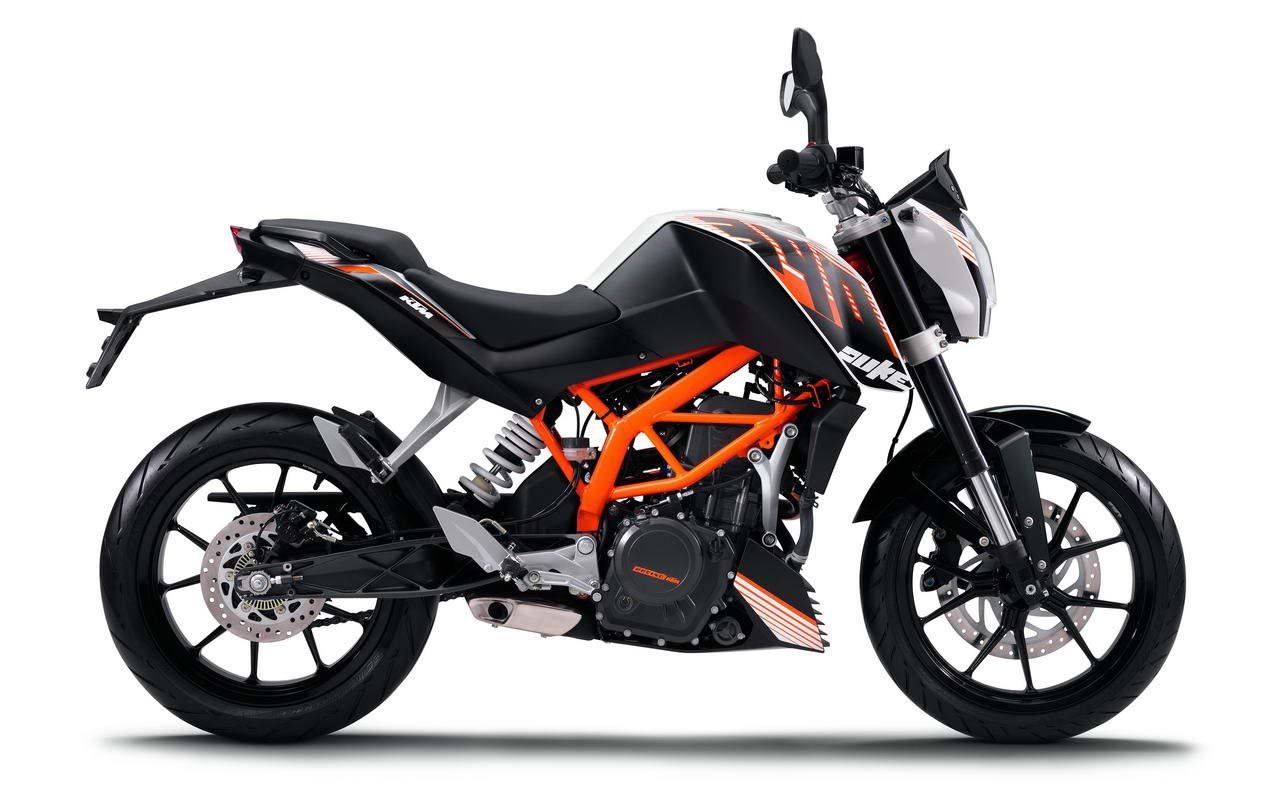
KTM unveils its yet another Duke - 390
It looks more similair to its kid the Duke 200
The naked bike is a power packed feast for bikers
Link for KTM official page


|
| ||||||||||||||||||||||||||||||||||||||||||||||||||||||||||||||||||||||||||||||||||||||||||||||||||||||||||||||||||||||||||||||||||||
KTM 390 Duke Review
Best mid-range naked bike in India
Friday, May 31, 2013
Overview
KTM has confirmed their plans to launch the 390 Duke in India. The bike will soon hit the Indian roads in the upcoming months of this year. We try to find out what to expect from this Austrian street boy.
KTM 390 Duke Exterior
Indians have already tasted the unique styling of KTM and it got a really warm reception in our market. This upcoming 390 Duke will also be one of the finest examples of naked bikes. The bike looks picture perfect from every angle. It has an oval shaped headlight which gets surrounded by a thick cowl with sporty graphics. The tiny but pointed clear lens indicators are placed on this cowl. Its small black colored rear view mirrors get mounted on its handle bar. Its wide front tyre, compact fender and beefy forks make this bike look macho. Its fender gets extended along its black colored forks.
KTM has opted for an eye catching 10 spoke alloy wheel design for this bike which complements the compact appearance of its tyre and fender. Move to the side of this bike and you will notice the act of mass centralization in this bike. Most of the bulk of this bike is placed in the center which includes its engine, orange painted side steel frame and aggressively styled fuel tank. It’s sharply pointed under cowl and fuel tank features aerodynamic style and graphics on it. You will have to search its silencer though which is placed just below its foot peg. The bike sports split seats and grab rail which sits on a rear cowl which looks much higher than the regular position. The gap between its rear fender and tyre gives the explicit naked look to this bike. Duke 390 has an extended yet compact fender which features its small LED tail light on its top.
Instrument Console of KTM 390 Duke
KTM 390 Duke has a similar instrument console to its younger sibling, 200 Duke. It has a square shaped orange colored LCD which displays its digital speedometer, odometer, tachometer, 2-trip meter and fuel gauge. The other essential LED indicators are placed around this LCD.
Engine and Gearbox
The bike is equipped with a single cylinder, 4-stroke 373cc engine. The power output of this liquid cooled, DOHC engine is of 44 bhp which arrives at 9500 rpm. Its utmost torque output of 35 nm comes at 7250 rpm. KTM has mated this engine with a six-speed manual gearbox with a gear shift pattern of one gear down and five gears up-shift.
Acceleration and Performance
The bike only weighs around 139kgs, thanks to its lightweight tubular frame which allows this bike to be a speed enthusiast. It has an incredible power to weight ratio which is quite noticeable when you rev this bike. It has a lightning fast throttle response which helps this bike to reach 0-100km/hr in 7 seconds. KTM has well matched the gear ratios of this bike for the proper power utilization. The gear transitions are very smooth and accurate. This engine is also very refined and feels vibration less as even at the speed of 150km/hr, the bike makes little noise. After getting the initial momentum, the heavy power production of this engine comes in to play which encourages you to take this bike on highways. It has an awesome mid-range which helps this bike to be faster than most of the naked bikes in India. The bike impresses you best when driven between 100km/hr- 150km/hr. The power packed performance of this bike is not limited to on road only; it has a superb off road ability which can be tested on any terrain.
KTM 390 Duke Mileage
You can expect this bike to return an overall fuel efficiency of around 22-25km/ltr.
Comfort while Driving KTM 390 Duke
Despite being on the faster side, 390 Duke is a very comfortable bike. It has a full size padded seat which offers you optimum comfort on long journeys. The compact design of this bike allows you a superb command over this bike. It has short, vibration free handle bar which gives you a firm palm grip. KTM has also placed its foot pegs really well as they not only give you a sporty riding posture but also allows you to frequently move your legs while doing off roading.
Storage Space and Safety Features
There is no standard storage space in this bike although it has significant safety features like radial mounted four piston front brake callipersand one brake calliper at the back while it also has a powerful headlight.
Suspension and Braking System
KTM has appointed up side- down front telescopic forks of 43mm and aluminium swing arm with rear mono shock absorber in this bike. 390 Duke sports a front disc brake of 300mm while it has a rear disc brake of 230mm. This bike will be offered with ABS which will make your driving safer.
Ride and Handling
KTM 290 Duke is a very enthusiastic bike which offers an extremely light and convenient handling. The bike can be steered easily and behaves like any other commuter bike in city traffic. High speed stability and cornering abilities are very impressive thanks to its racing inspired suspension system and broad tyres. It wheelbase of 1367mm brings stability to this bike while its high ground clearance of 170mm improves its off road ability. The bike astonishes you the way it handles off road. Its compact handle bar helps this bike to move frequently while its tyres provide commendable grip. Stunt riders are also going to love this bike as you can turn off its ABS and do all the stunting. Its light weight gives you tremendous confidence while performing stunts.
Tyre Size, Shades and Variants
The bike is fitted with R17 sizes of tyres. KTM is likely to offer this bike in two variants and three shades.
Verdict
Looking at the pricing of 200 Duke, we expect KTM to price this bike below INR 2 lakhs (expected, approx., may vary). If they manage to do so then this bike will certainly impress Indian buyers. It’s an extremely powerful bike which is fuel efficient as well. Moreover, it’s unmatchable in terms of ride and handling. We feel it’s a complete value for money bike and will have a bright future in India.
Subscribe to:
Posts (Atom)
Subscribe To


 Posts
All Comments
Posts
All Comments
Popular Posts
-
 CPU starts but monitor no signal FIX:
-
Xbox 720 Specs: Eight Core CPU, 8 GB RAM With Windows 8 Kernel ?
-
 Lumia Devices Showing Sad Face After Update
-
 PazSan app for Android:
-
 how to change your android phone's name (product name and everything (root))
-
OnePlus Two found on the benchmarks list:
-
 Windows 8.1 stable activator
-
 Asus Zenfone 2 launched officially in India with price tags
-
Windows : Take Ownership
-
OnePlus made a farewell to the frustrating invite system.